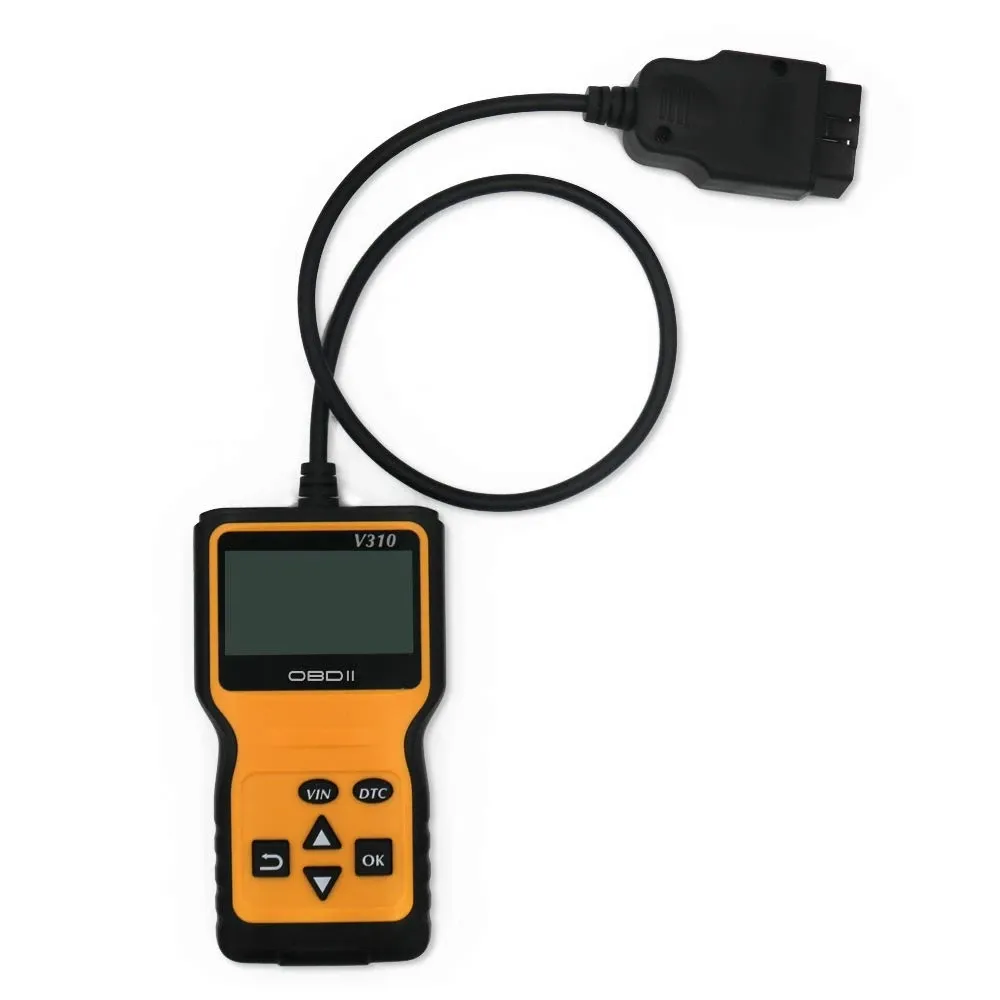
V310 OBD2 Code Reader: The Complete UK Buyer's Guide for 2026
A practical, no-nonsense guide to using the V310 OBD2 code reader for engine fault checks, I/M readiness, vehicle information and selected live data.
What Is a V310 OBD2 Code Reader and Why You Need One
A car OBD2 code reader measures the health, voltage, and cranking capacity of your vehicle's battery — telling you whether it's fit for purpose or about to leave you stranded. Simple as that. I've lost count of the mornings I've walked out to my car on Cregagh Road in the dead of a Belfast winter, turned the key, and got nothing but a sad clicking noise. A decent battery analyser would've warned me days before.
Here's the thing most people don't realise: a battery can show 12.6V on a multimeter and still fail under load. That's where a proper automotive OBD2 code reader earns its keep. It applies a controlled load and measures how the battery responds — giving you CCA (Cold Cranking Amps) readings, internal resistance, and an overall health percentage.
Whether you're a weekend DIYer or running a garage, testing before replacing saves money. A new battery costs £80–£180 depending on the vehicle. Why spend that if your alternator's the actual culprit?
OBD2 Scanner Functions: What Does the V310 Support?

Not all testers do the same job. The market's split into a few distinct categories, and picking the wrong type is a waste of money.
Digital Load Testers
These apply an actual electrical load to the battery and measure voltage drop. They're the gold standard for professional use. Expect to pay £40–£150 for a decent one. Heavy, accurate, and they'll tell you definitively whether a battery's knackered.
Conductance Testers
Modern conductance-based analysers send a small AC signal through the battery and measure internal resistance. Faster, safer, and they work on flat batteries too. Most professional car OBD2 code readers in 2026 use this method. Price range: £60–£300+.
Simple Voltmeters and Multimeters
A multimeter gives you voltage — that's it. Useful for a quick check (12.4V or below means it needs charging), but it won't tell you about capacity or cranking ability. Fine as a first step, not a replacement for proper analysis.
OBD2 Scanners with Battery Monitoring
Some diagnostic tools, like the V310 OBD2 Code Reader, can monitor battery voltage in real-time through your car's onboard diagnostics port. At £37.95, it's brilliant for ongoing monitoring alongside a dedicated tester. The V310 OBD2 Code Reader reads live data, clears fault codes, and gives you a window into what your car's ECU actually sees.
How to Choose the Right OBD2 Code Reader
The best OBD2 code reader for your situation depends on three things: what vehicles you're testing, how often, and your budget. Let me break it down.
Battery Types Supported
Make sure your tester handles the battery chemistry in your vehicle. Most cars use standard flooded lead-acid, but newer vehicles increasingly use AGM (Absorbent Glass Mat) or EFB (Enhanced Flooded Battery) for start-stop systems. A good digital OBD2 code reader should support all three. If you ride motorcycles too, check it handles smaller 12V motorcycle batteries — some units have a minimum CCA threshold of 100A that rules out bike batteries.
CCA Range
For cars, you want a tester that reads at least 100–1700 CCA. Most UK car batteries sit between 400–800 CCA. Vans and 4x4s can push 900+.
Display and Readability
Backlit screens matter. You'll be using this in dim garages or under bonnets in poor light. Colour screens with clear pass/fail indicators save time. Some budget testers have tiny monochrome displays — workable, but not ideal if your eyesight's not what it was., a favourite among Britain’s tradespeople
Printing and Data Logging
Professional workshops need printable results for customer records. Home users? Probably not essential. But Bluetooth connectivity for logging results to your phone is a nice-to-have that's becoming standard in the £80+ bracket.
Build Quality
Look, I've dropped tools more times than I'd like to admit. Rubberised housings and decent clamp leads matter. Cheap testers with thin crocodile clips corrode within a year. The BSI standards for electrical test equipment (BS EN 61010) ensure basic safety compliance — check for CE marking at minimum.
Best Car OBD2 Code Readers UK — Our 2026 Picks

I've tested a fair few of these over the past couple of years. Some were spot on, others went straight back in the box. Here's what actually performs.
| Tester | Type | CCA Range | Battery Types | Price (approx.) | Best For |
|---|---|---|---|---|---|
| Ring RBA50 | Digital Conductance | 100–1700 CCA | Flooded, AGM, EFB, GEL | £75–£90 | Serious home mechanics |
| Topdon BT200 | Conductance | 100–2000 CCA | Flooded, AGM, EFB, GEL | £55–£70 | Best value all-rounder |
| Foxwell BT705 | Conductance + Cranking | 100–2000 CCA | All 12V/24V types | £90–£120 | Professional workshops |
| Ancel BST500 | Conductance + Printer | 100–2000 CCA | Flooded, AGM, EFB | £110–£140 | Garages needing printouts |
| Konnwei KW208 | Digital Conductance | 100–2000 CCA | Flooded, AGM, GEL | £35–£50 | Budget-friendly starter |
Honestly, for most people reading this, the Topdon BT200 hits the sweet spot. Decent build, accurate readings, and it won't break the bank. If you're running a workshop or mobile mechanic service, the Foxwell BT705 is worth the extra — the 24V capability covers vans and commercial vehicles too.
Worth the extra spend on the Ancel? Only if you need thermal printouts for customer invoices. Otherwise, save your money.
Why Does My Car Battery Keep Dying in Cold Weather?
Cold weather is a battery killer. Full stop. If you've ever wondered "can cold weather drain a car battery?" — yes, absolutely it can. Here's the science in plain English.
At 0°C, a fully charged battery loses roughly 35% of its cranking power. At -20°C, that drops to about 50%. Meanwhile, your engine needs up to twice the cranking power to start in freezing conditions because oil thickens and internal resistance increases. It's a double hit.
The Belfast Winter Problem
I speak from experience here. We don't get the extreme cold that Scotland or the Highlands see, but those damp 2–5°C mornings in January and February are murder on older batteries. The moisture accelerates terminal corrosion, and short trips (school run, quick nip to the shops) never fully recharge the battery. Over a few weeks, it slowly dies.
What Actually Causes Cold Weather Battery Death
- Reduced chemical reaction rate — lead-acid batteries rely on chemical reactions that slow dramatically below 10°C
- Increased parasitic drain — modern cars draw 20–80mA even when parked (alarms, keyless entry modules, dashcams)
- Short journeys — the alternator needs 20+ minutes of driving to replace the energy used starting the engine
- Age — a 4-year-old battery that's fine in summer will often fail in its first proper cold snap
A regular test with a vehicle OBD2 code reader from October onwards gives you early warning. If your battery's showing below 70% health in autumn, replace it before winter bites. Trust me on this one.
Trickle Charging a Car Battery: What You Need to Know
A OBD2 code reader delivers a low, constant current (typically 1–2 amps) to maintain battery charge over extended periods. It's not the same as a standard charger — and understanding the difference matters.
OBD2 Scanner Functions and Limits
A standard charger pushes 4–12 amps to bring a flat battery back to full charge in 4–12 hours. A OBD2 code reader maintains an already-charged battery, compensating for natural self-discharge. Think of it this way: a charger is a sprint, a OBD2 code reader is a marathon.
Modern OBD2 scanners — sometimes called battery car maintainers — combine both functions. They'll charge at higher amperage until the battery's full, then drop to a maintenance float charge. These are what I'd recommend for most people. Set it and forget it., meeting British quality expectations
When to Use an OBD2 Code Reader
- Classic cars stored over winter
- Vehicles parked for 2+ weeks (holidays, second cars)
- Motorcycles during off-season — a 12V motorcycle battery OBD2 code reader is essential if you're not riding October through March
- Cars with high parasitic drain (aftermarket alarms, dashcams on parking mode)
Do car OBD2 scanners work? Yes — but only if the battery's still viable. A OBD2 code reader won't resurrect a dead cell. That's where testing first with a battery car tester saves you plugging in a charger for 48 hours only to find the battery's beyond saving.
How to Use a V310 OBD2 Code Reader in the UK
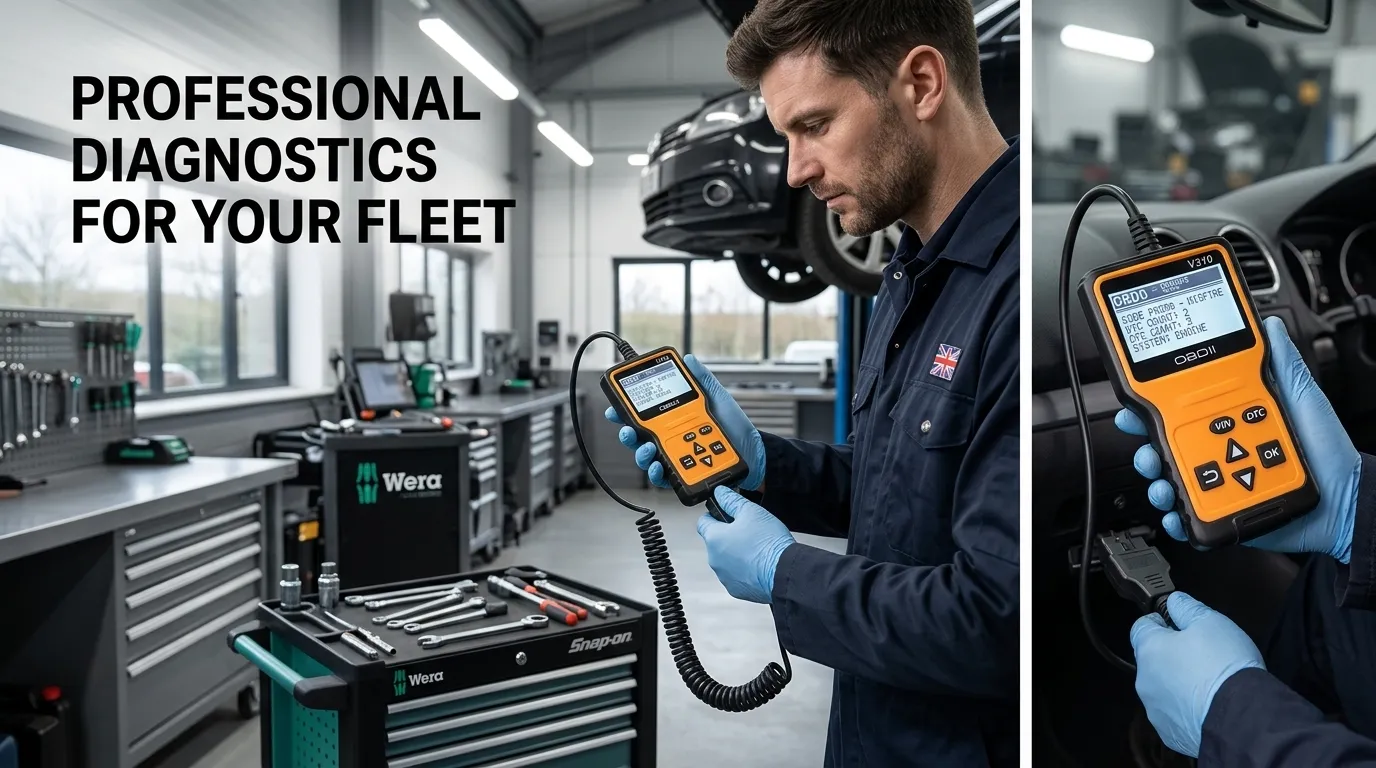
Straightforward process, but getting the steps right matters for safety and battery longevity.
Step-by-Step Process
- Test first — use your car OBD2 code reader to confirm the battery's worth charging (above 40% health)
- Turn off the ignition and remove the key. Disconnect any aftermarket electronics
- Connect red (positive) clamp to the positive terminal (+)
- Connect black (negative) clamp to a bare metal ground point on the engine block — not the negative terminal directly (reduces spark risk near the battery)
- Set the charger to the correct battery type (flooded/AGM/EFB) and amperage
- Switch on and leave until the charger indicates full (OBD2 scanners do this automatically)
- Disconnect in reverse order — black first, then red
Well, actually — step 4 is where most guides differ. Some say connect directly to the negative terminal. For modern sealed batteries in good condition, that's generally fine. But the engine block ground method is the safer practice, especially on older vehicles where you might get hydrogen gas accumulation around the battery. I stick with the ground point method out of habit.
Charging Times (Approximate)
| Battery State | Charger Output | Estimated Time to Full |
|---|---|---|
| 75% charged (12.4V) | 4A OBD2 scanner | 2–4 hours |
| 50% charged (12.2V) | 4A OBD2 scanner | 5–8 hours |
| Flat (11.8V) | 4A OBD2 scanner | 10–16 hours |
| Flat (11.8V) | 8A OBD2 scanner | 6–10 hours |
| Maintenance | 1A OBD2 code reader | Continuous (float mode) |
If you're also looking at jump starting capability for emergencies, a portable OBD2 code reader power bank is worth keeping in the boot. They've come on massively in the last few years — a decent V310 OBD2 code reader the size of a phone charger can crank a 2.0L diesel engine. Brilliant bit of kit for peace of mind, especially paired with a fault code reader to diagnose why you needed the jump in the first place.
Frequently Asked Questions
What is the best car OBD2 code reader for home use in the UK?
The Topdon BT200 offers the best balance of accuracy and value for home mechanics at £55–£70. It tests flooded, AGM, EFB, and GEL batteries with a CCA range of 100–2000A. For budget buyers, the Konnwei KW208 at £35–£50 is a solid entry point that handles most standard 12V car batteries reliably.
Can cold weather actually drain a car battery?
Yes. At 0°C a car battery loses approximately 35% of its cranking capacity, and at -20°C it loses around 50%. Combined with increased engine resistance in cold conditions, this is why batteries that seem fine in summer fail during winter. Batteries over 3 years old are particularly vulnerable to cold weather failure.
What's the difference between a car OBD2 scanner and a OBD2 code reader?
A standard charger outputs 4–12 amps to recharge a depleted battery in 4–16 hours. A OBD2 code reader outputs just 1–2 amps to maintain charge on an already-full battery during storage. Modern OBD2 scanners combine both functions — charging at full rate then switching to float maintenance automatically. OBD2 scanners are the better buy for most users.
How often should I test my car battery?
Test every 3 months once your battery passes its third year. From October onwards, test monthly — cold weather exposes weak batteries that seemed fine in warmer months. If your car sits unused for more than 2 weeks at a time, test before each use. Professional fleets typically test quarterly regardless of battery age.
Do I need to disconnect the battery before testing?
No. Modern conductance-based testers work with the battery connected and in-situ. You simply clamp the leads to the terminals. For the most accurate reading, turn off the ignition and all electrical loads first. Some professional testers can even assess the charging system and starter motor draw with the engine running.
Can an OBD2 scanner replace a dedicated OBD2 code reader?
Not entirely. An OBD2 scanner like the V310 OBD2 Code Reader (£37.95) monitors real-time voltage and can flag charging system faults, but it can't measure CCA or internal resistance. Use an OBD2 scanner for ongoing monitoring and a dedicated tester for periodic deep-health checks. Together they give you the full picture.
Key Takeaways
- Test before you replace — a car OBD2 code reader costing £35–£120 can save you spending £80–£180 on an unnecessary new battery
- Conductance testers are the modern standard — they're faster, safer, and work on flat batteries unlike older load testers
- Cold weather is the number one battery killer in the UK — test monthly from October and consider a OBD2 code reader for vehicles parked over 2 weeks
- OBD2 scanners beat basic OBD2 code readers — they combine charging and maintenance in one unit with automatic shutoff
- Pair your tester with an OBD2 scanner — real-time voltage monitoring catches alternator and charging faults that a standalone test might miss
- Budget pick for 2026: Topdon BT200 at £55–£70 — handles all battery types, 100–2000 CCA range, solid build quality
- Always follow UK electrical safety guidelines — charge in ventilated areas, connect positive first, disconnect negative first
Ready to try MotoPower UK?
Shop Now — £37.95