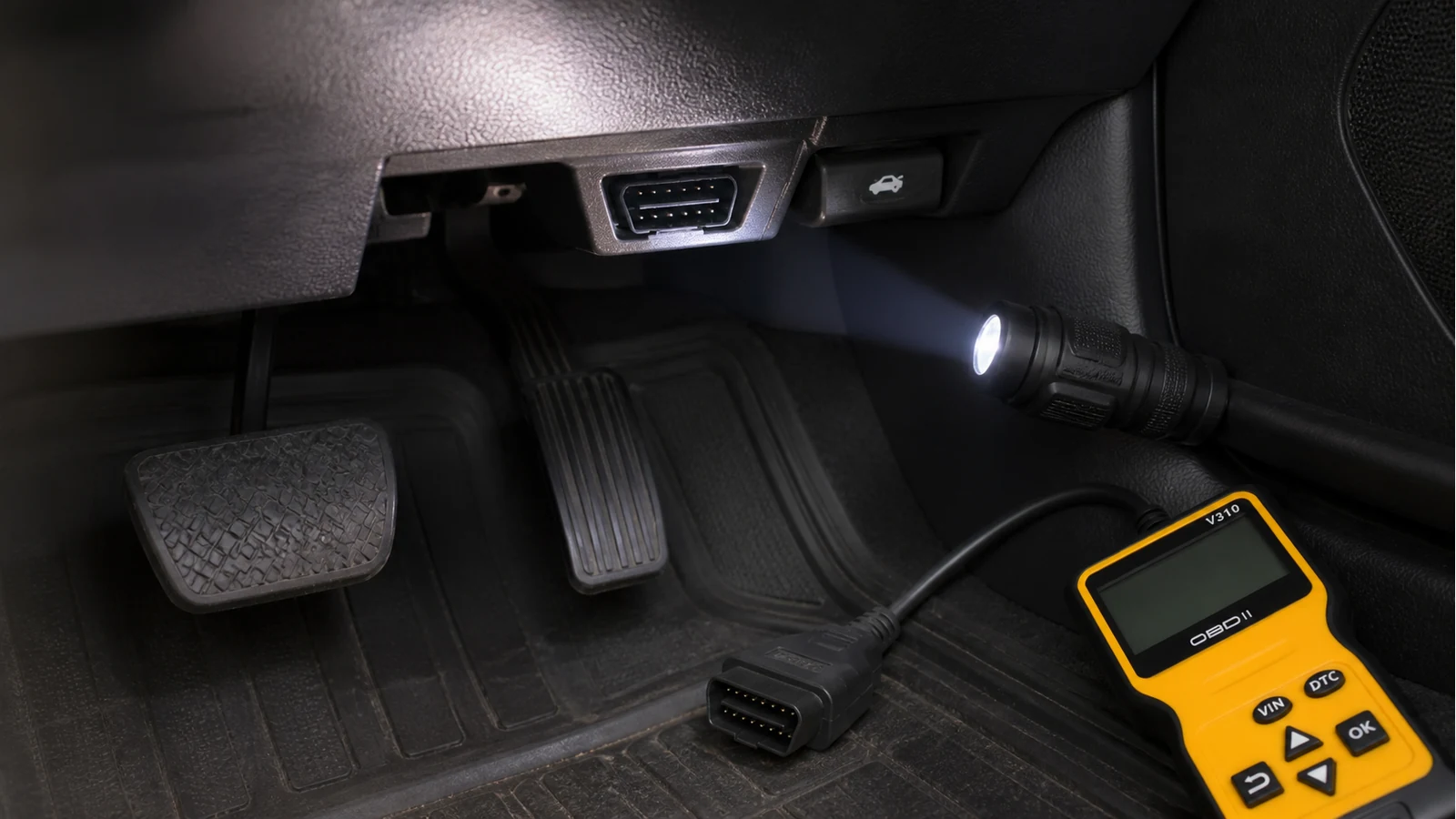
How To Find Obd2 Port Uk Car
How To Find Obd2 Port Uk Car is a label-first, evidence-first decision: start with the maker's instructions, then use the checks below before buying, cleaning, measuring or changing a routine.
How to find the OBD2 port on a UK car: a 5-minute plug-in checklist for beginners
This guide keeps the scope narrow: it answers the search question, separates confirmed evidence from assumptions, and avoids treating a product page as proof for claims it does not make.
The Mr Auto Fixer — OBD2 port location UK is used here for: UK petrol cars from 2001 and diesels from 2004 have a standardised 16-pin socket, commonly under the steering column.. The carfaultcodes.co.uk — how to read car fault codes is used here for: Port is almost always under the driver-side dash within arm's reach; plug in then set ignition as the reader requires.. The The AA — engine management light advice is used here for: EML investigation typically needs diagnostic equipment once the warning stays on..
Decision Checklist
- Direct answer: on most UK cars the 16-pin port is under the driver dash within reach of the wheel.
- Where to look first: steering-column underside, footwell uplight, fuse-cover flap, occasional centre-console/glovebox edge cases.
- Compatibility cue: petrol roughly from 2001 and diesel from 2004 for standardised OBD2 access in the UK market.
- Safe plug-in sequence: key off, seat connector one way, ignition on engine off, read codes, key off before unplugging.
- Common mistakes: forcing the plug, leaving a dongle permanently powered, clearing codes before writing them down.
- Next action: if no port on a pre-OBD classic, stop and use era-appropriate diagnosis instead.
Evidence Boundaries
- Use the cited source and the site evidence only.
What Not To Assume
- Avoid claiming every make hides the port in one identical place.
- Avoid promise enhanced BMW/Land Rover module access via generic tools.
- Avoid wiring or pinout modification advice.
Practical Next Step
Use the checklist in order. If the manual, care label, appliance guidance or safety source says no, stop there; if it says yes, test the least risky small area or setup before scaling up.
For a related site guide, compare this with bluetooth vs handheld obd2 scanner uk.
