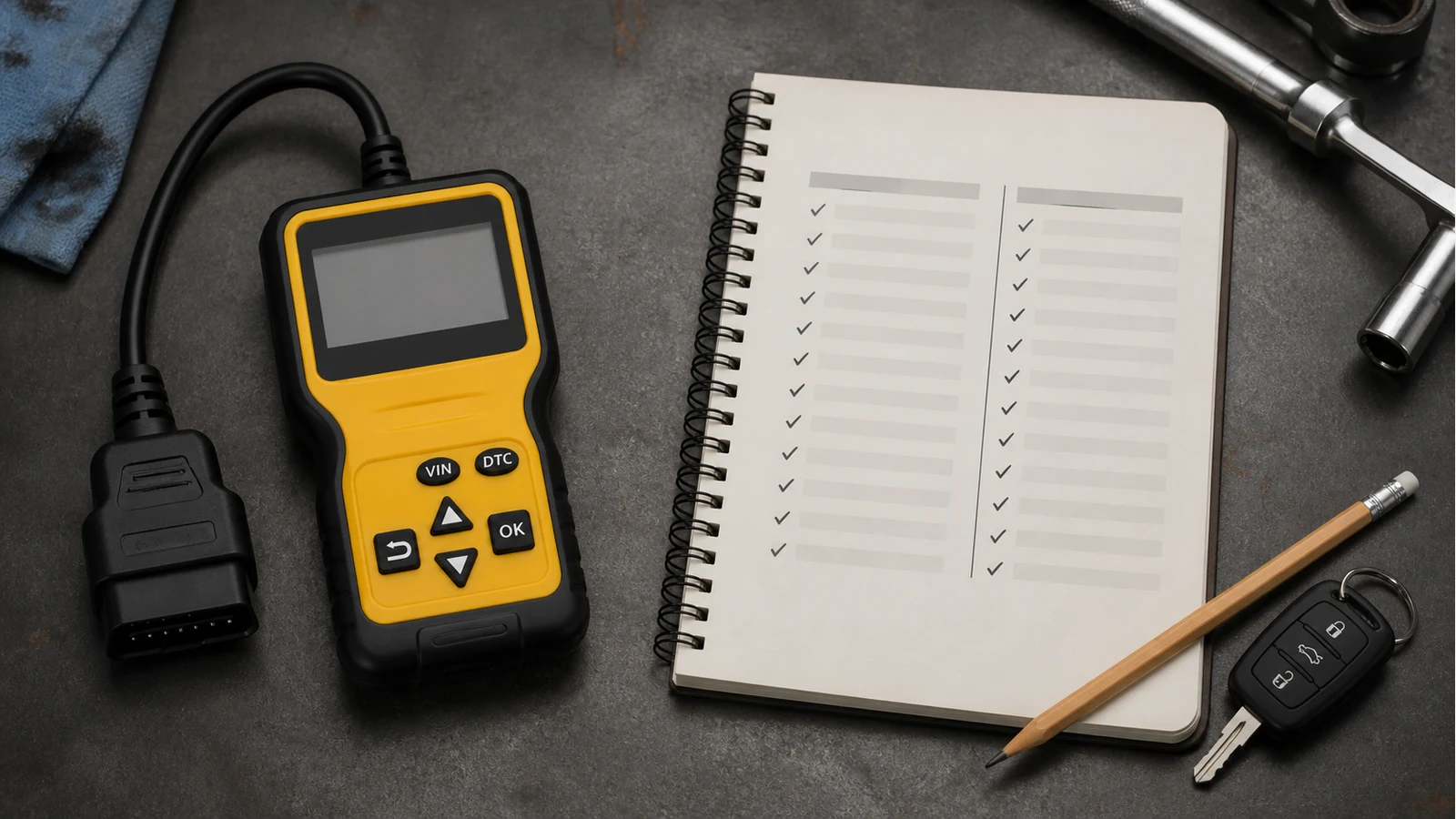
Pending Vs Stored Fault Codes Uk
Pending Vs Stored Fault Codes Uk is a label-first, evidence-first decision: start with the maker's instructions, then use the checks below before buying, cleaning, measuring or changing a routine.
Pending vs stored OBD2 codes: what UK drivers should act on before the light gets worse
This guide keeps the scope narrow: it answers the search question, separates confirmed evidence from assumptions, and avoids treating a product page as proof for claims it does not make.
The Innova — MIL pending confirmed permanent DTCs is used here for: Pending DTCs are first-trip detections; confirmed/stored DTCs set after confirmation and command the MIL on; permanent DTCs cannot be tool-cleared.. The Mr Auto Fixer — reading OBD fault codes UK is used here for: UK DIY scans should note both stored and pending codes; pending is an early warning before confirmation.. The GOV.UK MOT inspection manual — Section 8 Nuisance is used here for: An illuminated engine MIL indicating malfunction is a Major MOT defect, so understanding code status before test day matters..
Decision Checklist
- Direct answer: pending = fault seen once and watching; stored/confirmed = fault matured and usually lights the MIL.
- Comparison table: pending, stored, and permanent codes — what the light does and what to do.
- Used-car angle: empty stored list is not clean if pending codes or incomplete readiness remain.
- MOT angle: do not clear codes to hide issues; fix, drive, and re-scan.
- Scanner checklist: read both stored and pending before clearing anything.
- FAQ only for: will pending codes fail an MOT, and can pending codes disappear alone.
Evidence Boundaries
- Use the cited source and the site evidence only.
What Not To Assume
- Avoid claiming every consumer scanner exposes permanent DTCs.
- Keep claims limited to verified evidence for drive-cycle counts for every manufacturer.
- Avoid implying clearing pending codes is a repair.
Practical Next Step
Use the checklist in order. If the manual, care label, appliance guidance or safety source says no, stop there; if it says yes, test the least risky small area or setup before scaling up.
For a related site guide, compare this with bluetooth vs handheld obd2 scanner uk.
