The 30-Minute Pre-MOT Check: How to Find Failures Before the Tester Does
Around 28% of cars fail their first MOT. Use this 30-minute driveway checklist — lights, tyres, wipers and a fault-code scan — before you book.
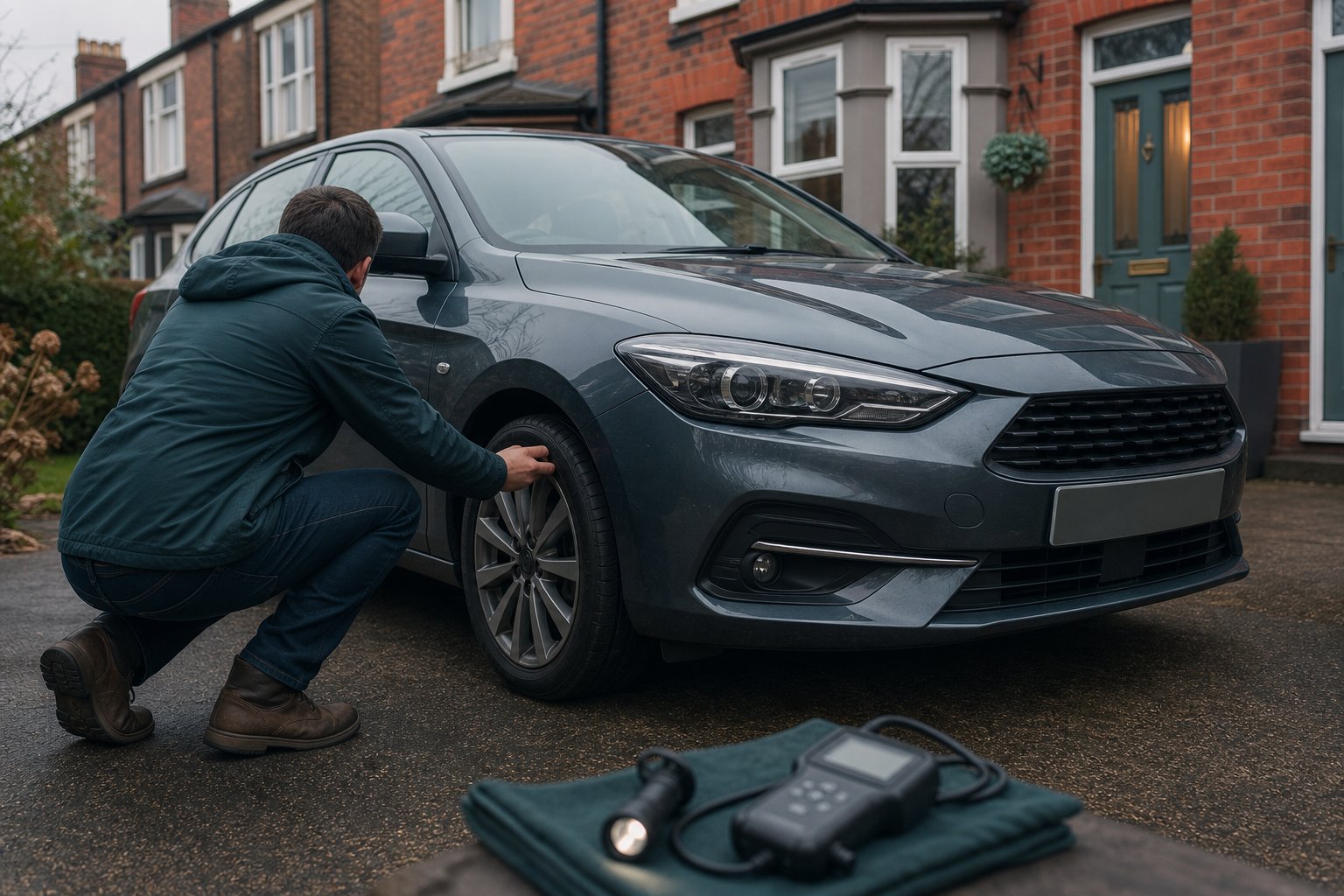
Roughly 28% of cars fail their MOT at the first attempt, according to DVSA test data — and the most common failure items are things you can check on your driveway: lights, tyres, wipers and warning lamps. This guide walks through a 30-minute pre-MOT routine, including a five-minute fault-code scan, so nothing on test day surprises you.
Why half an hour now beats a retest later
DVSA figures for the 2024–25 test year show over 7.9 million initial failures from around 35 million tests. Analysis of the published defect data shows lamps, reflectors and electrical items account for roughly a quarter of all failure items, with suspension and brakes close behind. In other words, most failed MOTs are not exotic mechanical mysteries. They are blown bulbs, worn tyres, empty washer bottles and warning lights that the owner had been ignoring for weeks.
A failed test costs you more than the fee. You lose the day, you may pay for a retest depending on how the garage handles it, and if the MOT has already expired you cannot legally drive the car except to a booked test or repair appointment. Thirty minutes of checking is cheap insurance.
Minutes 0–10: walk-around checks
Work around the car with the engine off but the ignition on where needed.
- Lights. Headlights (dip and main beam), sidelights, indicators, hazards, fog lamp, reversing light, brake lights and the number-plate bulb. Brake lights are easiest with a helper; failing that, reverse close to a wall or garage door and watch for the red glow. Lighting is the single biggest failure category in the DVSA data, and a bulb is usually a two-minute, few-pounds fix.
- Tyres. The legal minimum tread is 1.6mm across the central three-quarters of the tyre. Use the 20p test: insert the coin into the main grooves — if the outer band of the coin is visible, the tyre is at or near the limit. Check all four tyres in at least three places, and look for cuts, bulges and cracking on the sidewalls.
- Number plates. Clean, secure, unmodified spacing. A cracked or illegible plate is a fail.
- Windscreen. Chips larger than 10mm in the driver’s line of sight (the area swept by the wiper directly in front of the driver) or 40mm anywhere else in the swept area are failure territory.
Minutes 10–15: inside the car
- Wipers and washers. Wipers must clear the screen without smearing; a torn blade is a fail. The washer jets must actually deliver fluid — an empty bottle has failed many an otherwise healthy car. Top it up.
- Horn. One firm press. It must work.
- Seatbelts. Pull each belt sharply to confirm the inertia lock engages, and check webbing for cuts and fraying.
- Mirrors. Both required mirrors present, secure and intact.
Minutes 15–20: the dashboard lamp check
Turn the ignition on without starting the engine and watch the dashboard. The engine malfunction indicator lamp (MIL) — the amber engine outline — must illuminate and then go out once the engine is running. Under section 8.2.1.2(h) of the DVSA inspection manual, an engine MIL that stays on, or never lights at all, is a major defect: an automatic fail. The same applies to airbag, ABS, brake-fluid and steering warning lamps.
This is the check that catches people out, because the temptation is to hope the tester will not notice. They will. It is a defined inspection item, not a judgement call. If your engine light is on, you need to know why before test day — which is exactly what the next five minutes are for. Our guide to what the engine management light means for your MOT covers the rules in detail.
Minutes 20–25: read the fault codes yourself
Plug an OBD2 code reader such as the MotoPower V310 into the diagnostic socket (usually under the dashboard, driver’s side), turn the ignition on, and read the stored and pending codes. No app, pairing or subscription is needed — the V310 powers itself from the port and shows the code plus a plain-text description on screen.
What you learn in five minutes:
- No codes, no lamp: relax on this front and carry on with the rest of the checklist.
- A stored code with the lamp on: you now know what the garage will find, and you can decide whether it is a DIY fix (a loose fuel filler cap triggering an EVAP code, for instance) or a repair job. Booking the repair before the MOT beats paying for a diagnostic after a failed one — UK garages commonly charge £50–£150 just to read and interpret codes.
- A pending code with no lamp: a fault is developing. It will not fail the MIL check today, but it is a warning worth acting on.
One honest warning: do not simply clear the codes and drive straight to the test centre. Clearing codes resets the car’s readiness monitors and the lamp will return if the fault is real — we explain the full mechanics in can you clear fault codes before an MOT?
Minutes 25–30: paperwork and history
Look up the car on the free GOV.UK MOT history service. Last year’s advisories are this year’s likely failures — if the tester noted “brake pads wearing thin” or “tyre worn close to legal limit” twelve months ago, assume those items have got worse. Cross them off your list or get them seen to.
Quick reference: the full 30-minute list
| Time | Check | Common fail it prevents |
|---|---|---|
| 0–10 min | Lights, tyres, plates, windscreen | Lamps ≈25% of failure items; tyres ≈8% |
| 10–15 min | Wipers, washers, horn, seatbelts, mirrors | Visibility and driver-view items |
| 15–20 min | Dashboard warning lamps (MIL check) | Major defect 8.2.1.2(h) |
| 20–25 min | OBD2 code scan, stored + pending | Surprise engine-light failures |
| 25–30 min | MOT history and last year’s advisories | Repeat failures |
If anything on the list needs parts or expertise you do not have, at least you now walk into the garage informed — with the fault code in hand rather than a blank cheque. And if you run a small garage or prep used cars for sale, our trade options cover multi-unit pricing for exactly this kind of pre-check work. Questions about whether the V310 suits your car? Ask us directly.